

Most frozen pipes aren't a mystery once you know where to look. They tend to freeze in the same handful of places: the cold corners of a house where pipes sit close to outside air and far from the furnace.
To prevent frozen pipes, you need to find those weak spots before winter does. Frozen pipe prevention means keeping water lines warm enough, and protected enough from cold drafts, that the water inside never turns to ice.
It's worth the effort because a frozen pipe doesn't always announce itself. A pipe can freeze and split inside a wall or crawl space, then leak quietly once it thaws. By the time you notice a stain or a soft spot in the floor, the water has had hours, or days, to spread.
In this guide, you'll learn why some pipes freeze before others, how to check each risky area of your home room by room, and which fixes work best for each spot. Grab a flashlight. You can finish the walkthrough in about an hour.
Why Some Pipes Freeze First
A pipe freezes first when it loses heat faster than the house can replace it. Four things speed up that heat loss, and the riskiest pipes usually have more than one of them.
- Cold air nearby. Pipes in unheated spaces, or along walls that face outside, sit in air that can drop well below freezing.
- Drafts. Moving air pulls heat away from a pipe much faster than still air. A small gap that lets wind in can freeze a pipe that would otherwise be fine.
- No insulation. A bare pipe has nothing slowing down the heat it gives off.
- Still water. Water that isn't moving cools down to the temperature around it. Small pipes freeze faster than large ones because they hold less water.
According to guidance from the American Red Cross, pipes in unheated areas become at risk once outdoor temperatures fall to about 20°F (-7°C). Keep that number in mind as you check each area. If a space in your home can get that cold, the pipes in it need attention.
The Weak Point Walkthrough: Where Pipes Freeze Most
The American Red Cross lists the most common trouble spots as crawl spaces, attics, garages, kitchen cabinets, and pipes along exterior walls. Here's what to look for in each one.
Crawl Spaces
Crawl spaces are the most common place for pipes to freeze in homes built on them. Many crawl spaces have vents to the outside, and cold air flows right across the water lines.
What to check:
- Open or broken foundation vents
- Gaps around the crawl space access door
- Bare pipes, or foam sleeves that have slipped, split, or fallen off
- Pipes running close to the outside foundation wall
Exterior Walls
Pipes inside exterior walls freeze because the wall itself is cold. Kitchen and bathroom sinks on outside walls are the classic problem, especially when the cabinet doors stay closed and block warm room air.
What to check:
- Sinks, toilets, or laundry hookups on walls that face outside
- Cold air coming through the spot where a pipe passes through the wall (hold your hand near it on a windy day)
- Rooms that are often colder than the rest of the house, such as additions or rooms over a garage
Garages
Garages are cold, drafty, and often full of pipes. Water heaters, laundry lines, and supply lines heading to other parts of the house commonly run through them.
What to check:
- Pipes on the garage's exterior walls or ceiling
- A gap under the main garage door, where wind comes in
- How often the garage door stays open in cold weather
- Worn weatherstripping on the door between the garage and the house
Attics
Attic pipes are easy to forget because you rarely see them. Some homes run supply lines or water heater lines through the attic, where winter temperatures can come close to outdoor temperatures.
What to check:
- Any water line in the attic, including lines to a second-floor bathroom
- Pipes lying on top of the attic insulation instead of beneath it, on the cold side
- Gaps around the attic hatch that let warm house air escape
Basements and Rim Joists
Even heated basements have a cold edge. The rim joist, the wooden band where the floor framing meets the foundation, is often poorly sealed and insulated. Pipes that run along it can freeze.
What to check:
- Pipes running along the top of the foundation wall
- Drafts at the rim joist, especially where pipes, wires, or vents go through it
- Unfinished storage rooms that stay much colder than the rest of the basement
Outdoor Spigots and Lines
Outdoor faucets are the most exposed pipes on most homes. They need a different approach, which is mostly about draining them before the freeze. Our guide to winterizing outdoor pipes covers that process step by step (Internal Link: [link to "How to Winterize Outdoor Pipes Before the First Freeze: A Weekend Checklist" once it is published]).
Score Your Weak Points
Not every pipe needs the same level of protection. Use this quick scorecard to decide where to start. Give each pipe 1 point for every "yes":
| Question | Yes = 1 point |
|---|---|
| Does the pipe sit in an unheated space or along an outside wall? | ☐ |
| Can you feel a draft near it on a cold or windy day? | ☐ |
| Is the pipe bare, or is its insulation damaged or missing? | ☐ |
| Does water sit still in it for long stretches (a guest bath, a laundry line, a vacation home)? | ☐ |
3 or 4 points: Fix this pipe first. It has several risk factors stacked together. 2 points: Protect it before the first hard freeze. 0 or 1 point: Keep an eye on it during extreme cold.
This scorecard is a simple planning tool, not a guarantee. Very cold weather can still freeze a low-scoring pipe, especially if the cold lasts for days.
How to Protect At-Risk Pipes
Once you know where your weak points are, match each one to the right fix. Most homes need a mix of these four.
1. Stop the Drafts First
Sealing air leaks is often the most effective step, because moving air freezes pipes fastest. Insulation helps, but a strong draft can pull heat out of an insulated pipe anyway.
- Seal gaps where pipes pass through exterior walls and the rim joist with caulk or spray foam rated for the job.
- Add weatherstripping around crawl space access doors, attic hatches, and the door between the garage and the house. Self-adhesive weatherstripping like XFasten Self-Adhesive Weather Stripping is an easy fix for these spots.
- Keep the main garage door closed during cold weather.
- Consider closing or covering foundation vents for the winter. See the FAQ below before you do.
2. Insulate Exposed Pipes
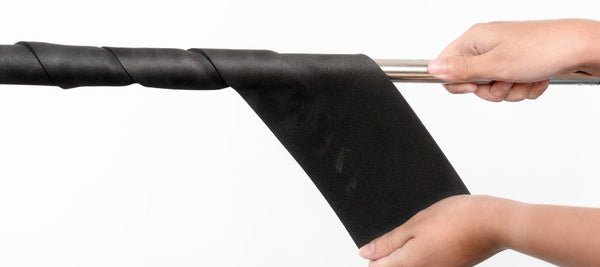
Insulation slows the heat a pipe gives off, which buys time during a cold night. Use foam pipe sleeves on long, straight runs. Use pipe insulation tape on elbows, valves, tees, and short or tight sections where sleeves don't fit well.
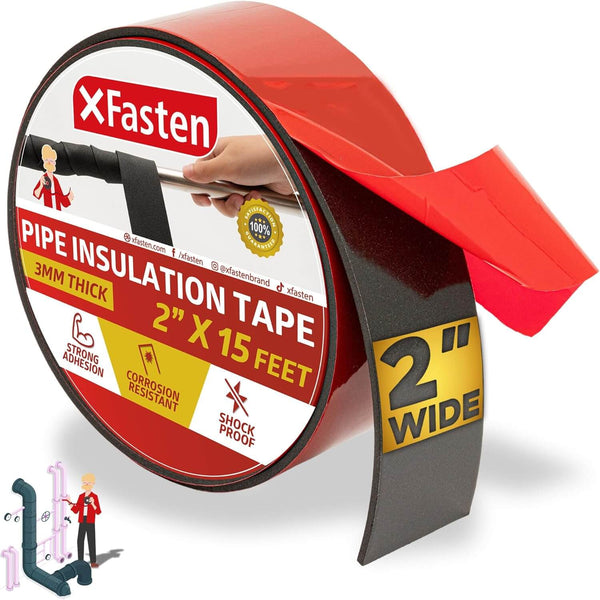
XFasten Pipe Insulation Tape is a 3 mm foam tape that comes in 2-, 3-, and 4-inch widths. It bends around fittings and also seals the seams and ends of foam sleeves so cold air can't sneak in underneath. Clean and dry the pipe first, then wrap it in a spiral with about a half-width overlap.
In attics, make sure pipes sit below the insulation or are fully wrapped. A pipe lying on top of the insulation is on the cold side of it.
3. Add Heat Where Insulation Isn't Enough
Insulation alone can't keep a pipe from freezing if the cold lasts long enough. For the highest-scoring pipes in very cold climates, a UL-listed heat cable adds warmth. Install it exactly as its instructions say, and don't cover it with materials the manufacturer doesn't approve.
4. Use Cold-Night Habits
A few small habits protect pipes on the coldest nights:
- Open cabinet doors under sinks on exterior walls so warm air can reach the pipes.
- Let a faucet drip on lines served by at-risk pipes. Moving water is harder to freeze, and an open faucet relieves pressure if ice does form.
- Keep your thermostat steady day and night. If you travel, the Red Cross recommends setting it no lower than 55°F.
- Know where your main shut-off valve is, and make sure everyone in the house can find it quickly.
Signs a Pipe May Already Be Freezing
Catching a freeze early can save the pipe. Watch for these warning signs during cold weather:
- A faucet that gives only a trickle, or no water at all
- Frost on the outside of a pipe
- A pipe section that looks swollen or bulging
- A toilet that won't refill after flushing
If you notice any of these, open the faucet and warm the pipe gently with a hair dryer or a heating pad, starting near the faucet. Never use an open flame. If you can't reach the frozen section or you see a crack, shut off the main water valve and call a licensed plumber.
Find Your Weak Spots Today, Sleep Easier All Winter
Frozen pipes almost always happen in predictable places: crawl spaces, exterior walls, garages, attics, and the cold edges of basements. Find those spots, score them, and protect the riskiest ones first. Stop drafts, insulate what's exposed, and add heat where the cold is severe.
The fixes are simple once you know where to look. Start with your highest-scoring pipe this week. XFasten Pipe Insulation Tape makes the tricky fittings and sleeve seams quick to cover, so you can move down your list in an afternoon.


Comments
No comments yet. Be the first!