

Pop the hood on any car built in the last thirty years, and you'll find dozens of wires running from the battery to the headlights, the sensors, the stereo, and everything in between. Left loose, those wires rub against metal, bake in engine heat, and eventually fray, short, or fail. That's the exact problem wire harness tape was built to solve.
Wire harness tape is the cloth-backed tape mechanics, electricians, and DIYers use to bundle, protect, and organize wiring. It wraps multiple wires into one clean, manageable harness instead of a loose tangle. Get it right, and your wiring lasts the life of the vehicle or project. Get it wrong — or skip it — and you're looking at chafed insulation, intermittent electrical gremlins, or a fire risk down the road.
This guide breaks down what wire harness tape actually is, why it matters more than most DIYers realize, and exactly how to apply it so your wiring stays protected for years. In this guide, you'll learn what sets wire harness tape apart from ordinary tape, where it's used most, and the wrapping technique professionals rely on to get a clean, lasting result.
Why Loose Wiring Is a Bigger Problem Than It Looks
A modern vehicle can have over a mile of wiring packed into a space the size of a suitcase. That wiring shares the engine bay with moving parts, sharp metal edges, road debris, and temperature swings that can range from freezing mornings to a scorching engine bay in summer. According to the National Highway Traffic Safety Administration, electrical system failures — including wiring damage — are among the most common causes of vehicle fires that aren't collision-related.
Zip ties alone bundle wires but do nothing to stop abrasion where the harness touches metal or plastic edges. Electrical tape protects a single splice but unwinds and gums up when used to wrap a long run of wire. Wire harness tape solves both problems at once: it bundles the wires into a single harness and wraps that harness in a durable, abrasion-resistant layer that holds up to heat, vibration, and years of engine bay conditions.
What Is Wire Harness Tape, Exactly?
Wire harness tape is a woven cloth (fabric) tape coated with an adhesive, designed specifically for wrapping bundles of electrical wiring. It looks similar to gaffer tape or cloth electrical tape at a glance, but it's engineered for a different job: long-term wire protection rather than a quick patch.
What makes it different from regular tape:
- Cloth backing — Woven fabric flexes around corners and conduit without cracking, unlike vinyl electrical tape, which stiffens and splits over time.
- Non-conductive adhesive — Safe to wrap directly against bare wire junctions without creating a short.
- No sticky residue — Designed to be removed and reapplied during repairs without leaving gum behind on connectors or harness clips.
- Abrasion resistance — The woven texture stands up to rubbing against metal brackets, firewalls, and body panels far longer than smooth-backed tape.
- Heat tolerance — Built to handle the temperature swings of an engine bay, unlike standard masking or packing tape, which softens and unwinds under heat.
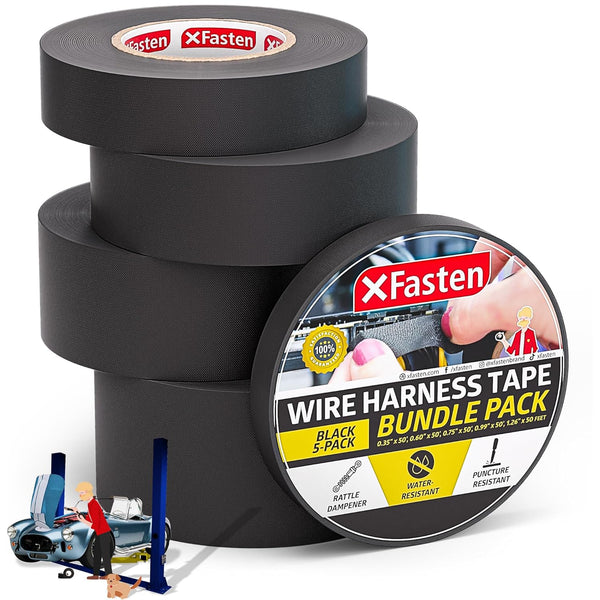
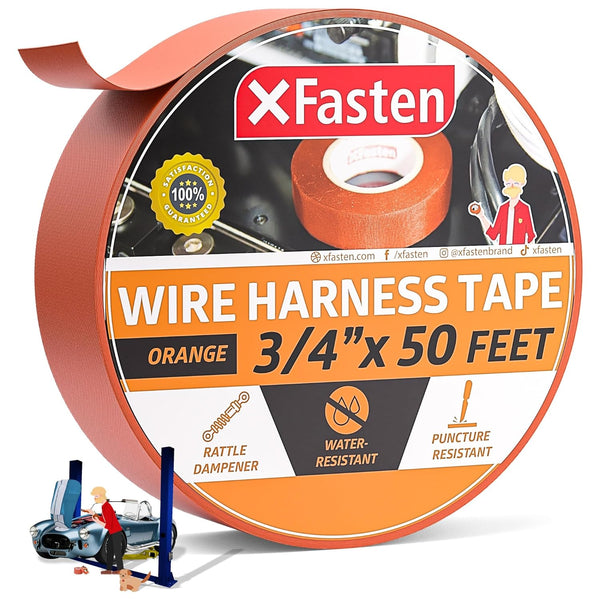
XFasten's Wire Harness Tape (¾" x 50ft, sold in a 10-pack) is built around this exact job: enough length in each roll to cover a full harness run, with enough rolls in the pack to handle a whole vehicle, boat, or workshop's worth of wiring in one order.
Where Mechanics and DIYers Actually Use It
Wire harness tape isn't just an automotive product — it shows up anywhere multiple wires need to travel together and stay protected. Common applications include:
- Engine bay wiring — Bundling alternator, sensor, and ignition wiring away from heat sources and moving belts.
- Under-dash and interior harnesses — Wrapping stereo, gauge, and accessory wiring during a restomod or custom build.
- RV and boat wiring — Protecting 12-volt wiring runs from moisture, vibration, and chafing against fiberglass or metal edges.
- Home theater and AV setups — Bundling speaker and HDMI cable runs behind entertainment centers for a cleaner look and less strain on individual cables.
- Trailer and lighting harnesses — Wrapping the wiring that runs from a tow vehicle to trailer lights, where road spray and constant flexing are a daily reality.
If you've ever opened a factory wiring harness and noticed the wires are already wrapped in a similar cloth tape, that's not a coincidence — OEM manufacturers use the same approach because it's simply the most reliable way to protect a wire bundle for the long haul.
How to Wrap a Wire Harness the Right Way
Here's the technique that keeps a harness protected and looking clean, whether you're wrapping three wires or thirty:
- Organize the wires first. Gather the wires you want to bundle and lay them straight and parallel. Use a zip tie every 12–18 inches to hold the bundle's shape before you start taping — this keeps wires from shifting once they're wrapped.
- Start at one end with a clean anchor wrap. Wrap the tape around the bundle two full times to lock the starting point in place before you begin moving down the harness.
- Wrap in a 50% overlapping spiral. Angle the tape at roughly a 45-degree angle and overlap each pass by about half the tape's width. This keeps the harness flexible while sealing out moisture and debris — wrapping straight across without an angle leaves gaps that defeat the purpose.
- Add extra layers at stress points. Anywhere the harness bends sharply, passes through a metal grommet, or sits near a heat source, double back and add a second layer for reinforcement.
- Finish with another anchor wrap. End the same way you started — two tight wraps — and press the tail down firmly so it doesn't catch and peel during installation.
Best practice: Wrap wiring on a workbench before installing it whenever possible. It's far easier to get a tight, even spiral on a flat surface than while you're upside down under a dashboard.
Wrap It Once, Wrap It Right
Loose, unprotected wiring is one of the most common — and most preventable — causes of electrical headaches down the road. A properly wrapped harness keeps wires organized, protected from abrasion and heat, and easy to trace the next time you're under the hood.
Now that you know what to look for and how to wrap it, the next step is having the right tape on hand before you start the job. XFasten's Wire Harness Tape (¾" x 50ft, 10-Pack) gives you enough tape to wrap a full engine bay harness with rolls to spare for the next project — no mid-job trip to the parts store required.
Ready to see the full lineup? Browse XFasten's Wire Harness Tape collection to find the right roll for your next wiring project, and subscribe to the XFasten newsletter for more DIY wiring and workshop tips delivered straight to your inbox.


Comments
6 Comments
<p>https://fullservicelavoro.jimdosite.com/<br> http://treeads.nation2.com/<br> https://jumperads.yolasite.com/<br> http://jumperads.nation2.com/<br> http://transferefurniture.hatenablog.com<br> https://atar-almadinah.weebly.com/<br> https://allmoversinriyadh.wordpress.com/<br> https://allmoversinriyadh.wordpress.com/2022/04/09/%d8%b4%d8%b1%d9%83%d8%a9-%d8%aa%d9%86%d8%b8%d9%8a%d9%81-%d8%a8%d8%a7%d9%84%d8%b1%d9%8a%d8%a7%d8%b6-%d9%85%d8%ac%d8%b1%d8%a8%d8%a9/<br> https://allmoversinriyadh.wordpress.com/2022/04/07/%d8%a7%d9%81%d8%b6%d9%84-%d8%b4%d8%b1%d9%83%d8%a9-%d8%aa%d9%86%d8%b8%d9%8a%d9%81-%d8%a8%d8%a7%d9%84%d8%b1%d9%8a%d8%a7%d8%b6/<br> https://allmoversinriyadh.wordpress.com/2022/05/13/%d8%b4%d8%b1%d9%83%d8%a9-%d9%86%d9%82%d9%84-%d8%b9%d9%81%d8%b4-%d9%88%d8%ba%d8%b1%d9%81-%d8%a7%d9%84%d9%86%d9%88%d9%85-%d8%a8%d8%a7%d9%84%d8%b1%d9%8a%d8%a7%d8%b6/<br> https://companymoversinjeddah.wordpress.com/<br> https://moversfurniture2018.wordpress.com/2018/12/30/%D8%A7%D9%87%D9%85-%D9%85%D9%83%D8%A7%D8%AA%D8%A8-%D9%88%D9%85%D8%A4%D8%B3%D8%B3%D8%A7%D8%AA-%D8%B4%D8%B1%D9%83%D8%A7%D8%AA-%D9%86%D9%82%D9%84-%D8%B9%D9%81%D8%B4-%D8%A8%D8%AC%D8%A7%D8%B2%D8%A7%D9%86/<br> https://moversriyadhcom.wordpress.com/<br> https://moversmedina.wordpress.com/<br> https://moversfurniture2018.wordpress.com/<br> https://moversmecca.wordpress.com/<br> https://khairyayman74.wordpress.com/<br> https://companymoversmecca.home.blog/<br> https://companymoverstaif.home.blog/<br> https://companymoverskhamismushit.home.blog/ <br> https://whitear.home.blog/<br> https://companyhouseservice.wordpress.com/<br> http://bestmoversfurniture.wordpress.com/<br> https://companymoversjeddah.wordpress.com/<br> https://companycleaning307819260.wordpress.com/<br> https://companymoversriydah.wordpress.com/<br> https://ataralmadinah662300791.wordpress.com/<br> https://groups.google.com/g/moversfurniture/c/wwQFSNvgyAI<br> https://groups.google.com/g/moversfurniture/c/4L1oHETS4mQ<br> https://nowewyrazy.uw.edu.pl/profil/khairyayman<br> https://companyhouseservice.wordpress.com/2022/08/06/%d8%a7%d9%81%d8%b6%d9%84-%d8%b4%d8%b1%d9%83%d8%a9-%d8%aa%d9%86%d8%b8%d9%8a%d9%81-%d8%a8%d8%a7%d9%84%d8%b1%d9%8a%d8%a7%d8%b6/</p>
<p>http://www.domyate.com/2019/10/03/price-cleaning-tanks-in-jeddah/ اسعار شركات تنظيف خزانات بجدة<br> http://www.domyate.com/2019/09/25/movers-furniture-from-jeddah-to-egypt/ نقل عفش من جدة الي مصر<br> http://www.domyate.com/2019/09/24/movers-furniture-from-jeddah-to-lebanon/ نقل عفش من جدة الي لبنان<br> http://www.domyate.com/2019/09/22/%d8%a3%d9%86%d8%ac%d8%ad-%d8%b4%d8%b1%d9%83%d8%a7%d8%aa-%d9%86%d9%82%d9%84-%d8%a7%d8%ab%d8%a7%d8%ab-%d8%a8%d8%ac%d8%af%d8%a9/ شركات نقل اثاث بجدة<br> http://www.domyate.com/2019/09/22/best-company-movers-jeddah/ افضل شركات نقل اثاث جدة<br> http://www.domyate.com/2019/09/22/company-transfer-furniture-yanbu/ شركات نقل العفش بينبع<br> http://www.domyate.com/2019/09/21/taif-transfer-furniture-company/ شركة نقل عفش في الطائف<br> http://www.domyate.com/2019/09/21/%d8%b4%d8%b1%d9%83%d8%a7%d8%aa-%d9%86%d9%82%d9%84-%d8%a7%d9%84%d8%b9%d9%81%d8%b4/ شركات نقل العفش<br> http://www.domyate.com/2019/09/21/%d8%b7%d8%b1%d9%82-%d9%86%d9%82%d9%84-%d8%a7%d9%84%d8%b9%d9%81%d8%b4/ طرق نقل العفش<br> http://www.domyate.com/2019/09/20/%d8%ae%d8%b7%d9%88%d8%a7%d8%aa-%d9%86%d9%82%d9%84-%d8%a7%d9%84%d8%b9%d9%81%d8%b4-%d9%88%d8%a7%d9%84%d8%a7%d8%ab%d8%a7%d8%ab/ خطوات نقل العفش والاثاث<br> http://www.domyate.com/2019/09/20/best-10-company-transfer-furniture/ افضل 10 شركات نقل عفش<br> http://www.domyate.com/2019/09/20/%d9%83%d9%8a%d9%81-%d9%8a%d8%aa%d9%85-%d8%a7%d8%ae%d8%aa%d9%8a%d8%a7%d8%b1-%d8%b4%d8%b1%d9%83%d8%a7%d8%aa-%d9%86%d9%82%d9%84-%d8%a7%d9%84%d8%b9%d9%81%d8%b4-%d9%88%d8%a7%d9%84%d8%a7%d8%ab%d8%a7%d8%ab/ اختيار شركات نقل العفش والاثاث<br> http://www.domyate.com/2019/09/20/cleaning-company-house-taif/ شركة تنظيف منازل بالطائف<br> http://www.domyate.com/2019/09/20/company-cleaning-home-in-taif/ شركة تنظيف شقق بالطائف<br> http://www.domyate.com/2019/09/20/taif-cleaning-company-villas/ شركة تنظيف فلل بالطائف<br> http://www.domyate.com/ شركة نقل عفش<br> http://www.domyate.com/2017/09/21/%D9%86%D9%82%D9%84-%D8%A7%D9%84%D8%B9%D9%81%D8%B4-%D9%88%D8%A7%D9%84%D8%AA%D8%AE%D8%B2%D9%8A%D9%86/ نقل العفش والتخزين<br> http://www.domyate.com/2016/07/02/transfer-furniture-dammam شركة نقل عفش بالدمام<br> http://www.domyate.com/2015/11/12/%D8%B4%D8%B1%D9%83%D8%A9-%D9%86%D9%82%D9%84-%D8%B9%D9%81%D8%B4-%D8%A8%D8%A7%D9%84%D9%85%D8%AF%D9%8A%D9%86%D8%A9-%D8%A7%D9%84%D9%85%D9%86%D9%88%D8%B1%D8%A9/ شركة نقل عفش بالمدينة المنورة<br> http://www.domyate.com/2016/06/05/transfer-furniture-jeddah/ شركة نقل عفش بجدة<br> http://www.domyate.com/2017/08/10/movers-company-mecca-naql/ شركات نقل العفش بمكة<br> http://www.domyate.com/2016/06/05/transfer-furniture-mecca/ شركة نقل عفش بمكة</p>
<p>https://jumperads.com/jeddah/anti-insects-company-jeddah.html شركة مكافحة حشرات بجدة<br> https://jumperads.com/jeddah/water-leaks-detection-company-jeddah.html شركة كشف تسربات بجدة<br> https://jumperads.com/jeddah/jeddah-company-surfaces.html شركة عزل اسطح بجدة<br> https://jumperads.com/jeddah/jeddah-company-sewage.html شركة تسليك مجاري بجدة<br> https://jumperads.com/jeddah/jeddah-cleaning-company-sofa.html شركة تنظيف كنب بجدة<br> https://jumperads.com/jeddah/jeddah-cleaning-company-mosques.html شركة تنظيف مساجد بجدة<br> https://jumperads.com/jeddah/jeddah-cleaning-company-Carpet.html شركة تنظيف سجاد بجدة<br> https://jumperads.com/jeddah/jeddah-cleaning-company-tanks.html شركة تنظيف خزانات بجدة<br> https://jumperads.com/jeddah/jeddah-cleaning-company-swimming-bath.html شركة تنظيف وصيانة مسابح بجدة<br> https://jumperads.com/jeddah/jeddah-cleaning-company-Furniture.html شركة تنظيف الاثاث بجدة<br> https://jumperads.com/jeddah/jeddah-cleaning-company-home.html شركة تنظيف شقق بجدة<br> https://jumperads.com/jeddah/jeddah-cleaning-company-Carpets.html شركة تنظيف موكيت بجدة<br> https://jumperads.com/jeddah/jeddah-cleaning-company.html شركة تنظيف مجالس بجدة<br> https://jumperads.com/jeddah/jeddah-cleaning-company-house.html شركة تنظيف منازل بجدة<br> https://jumperads.com/jeddah/jeddah-cleaning-company-Villas.html شركة تنظيف فلل بجدة<br> https://jumperads.com/jeddah/jeddah-cleaning-company-curtains.html شركة تنظيف ستائر بجدة<br> https://jumperads.com/jeddah/jeddah-company-tile.html شركة جلي بلاط بجدة</p>
<p>https://disqus.com/by/disqus_d3gjkohn1L/about/<br> https://www.divephotoguide.com/user/Yanbu/<br> https://myspace.com/company.in.yanbu<br> https://letterboxd.com/yanbu11/<br> https://www.mightycause.com/profile/t8zo2f<br> https://www.diggerslist.com/680f3e4976f84/about<br> https://www.ted.com/profiles/49357932<br> https://lichess.org//Yanb https://talk.plesk.com/members/yanbu.416335/#abou https://www.indiegogo.com/individuals/38565807 https://hashnode.com/Company11<br> https://lichess.org//Yanbu https://www.mobafire.com/profile/yanbu11-1194053?profilepage https://myanimelist.net/profile/Yanbu https://www.noteflight.com/profile/d01b0aa45483c6a4ecfe8cf31fecd8c33c3f22a4 https://www.designspiration.com/leen1362023/saves/ https://spinninrecords.com/profile https://www.instructables.com/member/Yanbu/?cb=1745873769929 https://scioly.org/forums/memberlist.php?mode=viewprofile&u=157329 https://pastebin.com/u/Yanbu/comments https://www.gta5-mods.com/users/Yanbu https://www.divephotoguide.com/user/Yanbu/ https://audiomack.com/yanbu https://www.magcloud.com/account https://www.diggerslist.com/680f3e4976f84/about https://speakerdeck.com/yanbu https://triberr.com/Company11 https://www.hackerearth.com/leen1362023/<br> https://mastodon.social/Yanbu https://www.producthunt.com/company111<br> https://hub.docker.com/u/yanbu11?<em>gl=1*1wb44oo*_ga*Mzc5ODI2MC4xNzQ2MjY4NzYz*_ga_XJWPQMJYHQ*czE3NDYyNjg3NjIkbzEkZzEkdDE3NDYyNjg5NjckajYkbDAkaDA.<br> https://www.custommagnums.com/members/yanbu.172085/<br> https://sketchfab.com/Yanbu<br> https://www.ezistreet.com/profile/yanbu/about<br> https://therabbitroom.kindful.com/dashboard<br> https://www.wonderhowto.com/settings/personal/<br> https://www.warriorforum.com/members/Yanbu.html?utm_source=internal&utm_medium=user-menu&utm</em>campaign=user-profile<br> https://www.behance.net/yanbucompany<br> https://qiita.com/Yanbu11<br> https://www.scca.com/account<br> http://profiles.delphiforums.com/n/pfx/profile.aspx?webtag=dfpprofile000&userId=1891255966<br> https://app.zintro.com/profile/yanbu?ref=Yanbu<br> https://www.openstreetmap.org/user/Yanbu%20111<br> https://app.giveffect.com/users/1601264-company</p>
<p>شركة مكافحة حشرات بالجبيل وكذلك شركة كشف تسربات المياه بالجبيل وتنظيف خزانات وتنظيف الموكيت والسجاد والكنب والشقق والمنازل بالجبيل وتنظيف الخزانات بالجبيل وتنظيف المساجد بالجبيل شركة تنظيف بالجبيل تنظيف المسابح بالجبيل<br> https://jumperads.com/jubail/anti-insects-company-jubail.html شركة مكافحة حشرات بالجبيل<br> https://jumperads.com/jubail/water-leaks-detection-company-jubail.html شركة كشف تسربات بالجبيل<br> https://jumperads.com/jubail/jubail-company-surfaces.html شركة عزل اسطح بالجبيل<br> https://jumperads.com/jubail/jubail-company-sewage.html شركة تسليك مجاري بالجبيل<br> https://jumperads.com/jubail/jubail-cleaning-company-sofa.html شركة تنظيف كنب بالجبيل<br> https://jumperads.com/jubail/jubail-cleaning-company-mosques.html شركة تنظيف مساجد بالجبيل<br> https://jumperads.com/jubail/jubail-cleaning-company-Carpet.html شركة تنظيف سجاد بالجبيل<br> https://jumperads.com/jubail/jubail-cleaning-company-tanks.html شركة تنظيف خزانات بالجبيل<br> https://jumperads.com/jubail/jubail-cleaning-company-swimming-bath.html شركة تنظيف وصيانة مسابح بالجبيل<br> https://jumperads.com/jubail/jubail-cleaning-company-Furniture.html شركة تنظيف الاثاث بالجبيل<br> https://jumperads.com/jubail/jubail-cleaning-company-home.html شركة تنظيف شقق بالجبيل<br> https://jumperads.com/jubail/jubail-cleaning-company-Carpets.html شركة تنظيف موكيت بالجبيل<br> https://jumperads.com/jubail/jubail-cleaning-company.html شركة تنظيف مجالس بالجبيل<br> https://jumperads.com/jubail/jubail-cleaning-company-house.html شركة تنظيف منازل بالجبيل<br> https://jumperads.com/jubail/jubail-cleaning-company-curtains.html شركة تنظيف ستائر بالجبيل<br> https://jumperads.com/jubail/jubail-cleaning-company-Villas.html شركة تنظيف فلل بالجبيل<br> https://jumperads.com/jubail/jubail-company-tile.html شركة جلي بلاط بالجبيل</p>
<p>I am forever grateful to Oniha Spells for this unbelievable transformation in my life. I had tried the Mega Millions lottery for many years with zero success and was close to giving up completely. After contacting Dr. Oniha and allowing him to perform a powerful lottery spell for me, everything changed beyond explanation. Not long after, I won the Mega Millions jackpot of $420,000,000. I was in total shock and disbelief. Dr. Oniha was calm, professional, and spiritually reassuring throughout the entire process. His guidance and positive energy gave me confidence, and the results speak for themselves. I highly recommend Oniha Spells to anyone seeking a true miracle.<br> Email: droniha16@gmail.com<br> CALL/Whatsapp number: +16692213962</p>